


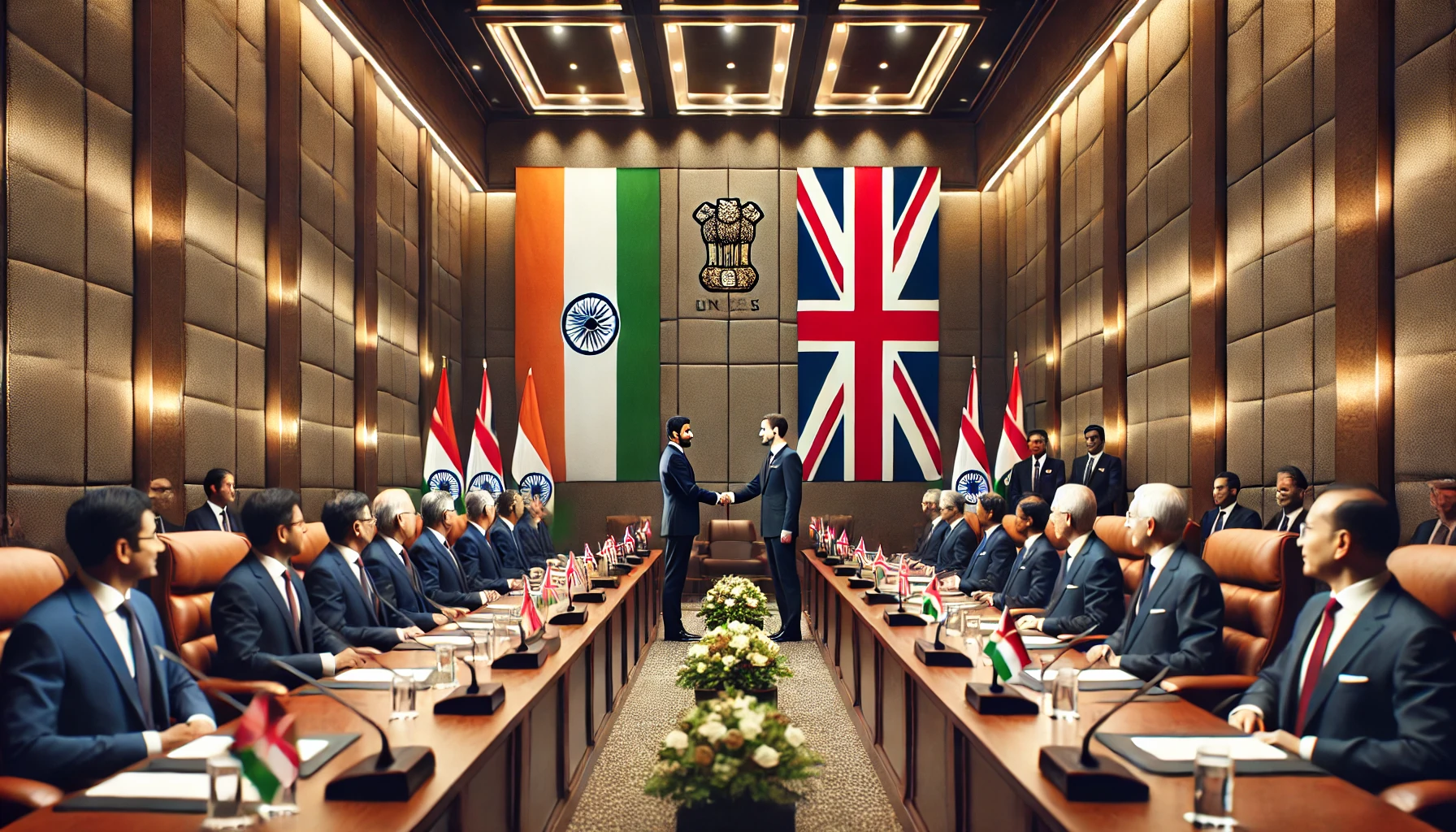
New Delhi, February 24, 2025 — After a suspension of nearly a year, India and the United Kingdom have recommenced negotiations on a proposed Free Trade Agreement (FTA). The discussions, which paused in May 2024 due to general elections in both countries, aim to strengthen economic ties and address key trade barriers.
High-Level Delegations Convene
UK’s Secretary of State for Business and Trade, Jonathan Reynolds, arrived in New Delhi to meet with India’s Commerce and Industry Minister, Piyush Goyal. Their bilateral discussions are set to pave the way for the 14th round of FTA negotiations, scheduled to begin on February 25. This round will build upon the progress made in previous discussions and seek to bridge existing gaps for a swift conclusion of the trade deal. (business-standard.com)
Key Focus Areas
The renewed talks will address several critical issues:
- Tariff Reductions: The UK is advocating for significant cuts in tariffs on exports such as automobiles, Scotch whisky, and food products. Currently, these goods face high import duties in India, making them less competitive in the Indian market. (thetimes.co.uk)
- Market Access for Services: British firms are seeking improved access to India’s burgeoning sectors, including accounting, architecture, and technology. Enhanced entry into these markets could bolster the UK’s service exports and provide Indian consumers with a wider array of services. (thetimes.co.uk)
- Visa Regulations: India is pressing for more relaxed visa norms for its professionals and students. This includes easier visa processing and extended post-study work opportunities in the UK, which would facilitate greater mobility and exchange of skilled labor between the two nations. (theguardian.com)
- Social Security Agreements: A significant concern for India is the national insurance contributions required from its workers temporarily assigned to the UK. India seeks a social security agreement akin to those the UK has with countries like Canada, France, and Australia, to prevent double taxation and make assignments more financially viable for Indian professionals. (thetimes.co.uk)
- Carbon Tax Exemptions: India is also requesting exemptions from the UK’s impending carbon tax, aiming to protect its exports from additional financial burdens and ensure they remain competitive in the UK market. (theguardian.com)
Economic Significance
Trade between India and the UK is currently valued at approximately £41 billion annually. With India projected to become the world’s third-largest economy by 2028, both nations recognize the immense potential for mutual economic growth through a comprehensive FTA. The agreement is expected to not only boost trade in goods and services but also enhance investment flows and create job opportunities in both countries. (theguardian.com)
Challenges Ahead
Despite the optimistic outlook, several challenges persist. India’s stringent trade policies and previous disagreements over issues like visa regulations and social security contributions have been stumbling blocks in past negotiations. Both sides will need to demonstrate flexibility and a willingness to compromise to reach a mutually beneficial agreement. (theguardian.com)
Conclusion
The resumption of FTA talks between India and the UK marks a significant step toward deepening bilateral relations and economic cooperation. As negotiations progress, stakeholders from various sectors will be keenly observing the developments, hopeful that a comprehensive and equitable agreement will emerge, fostering growth and prosperity in both nations.







Leave a Reply