


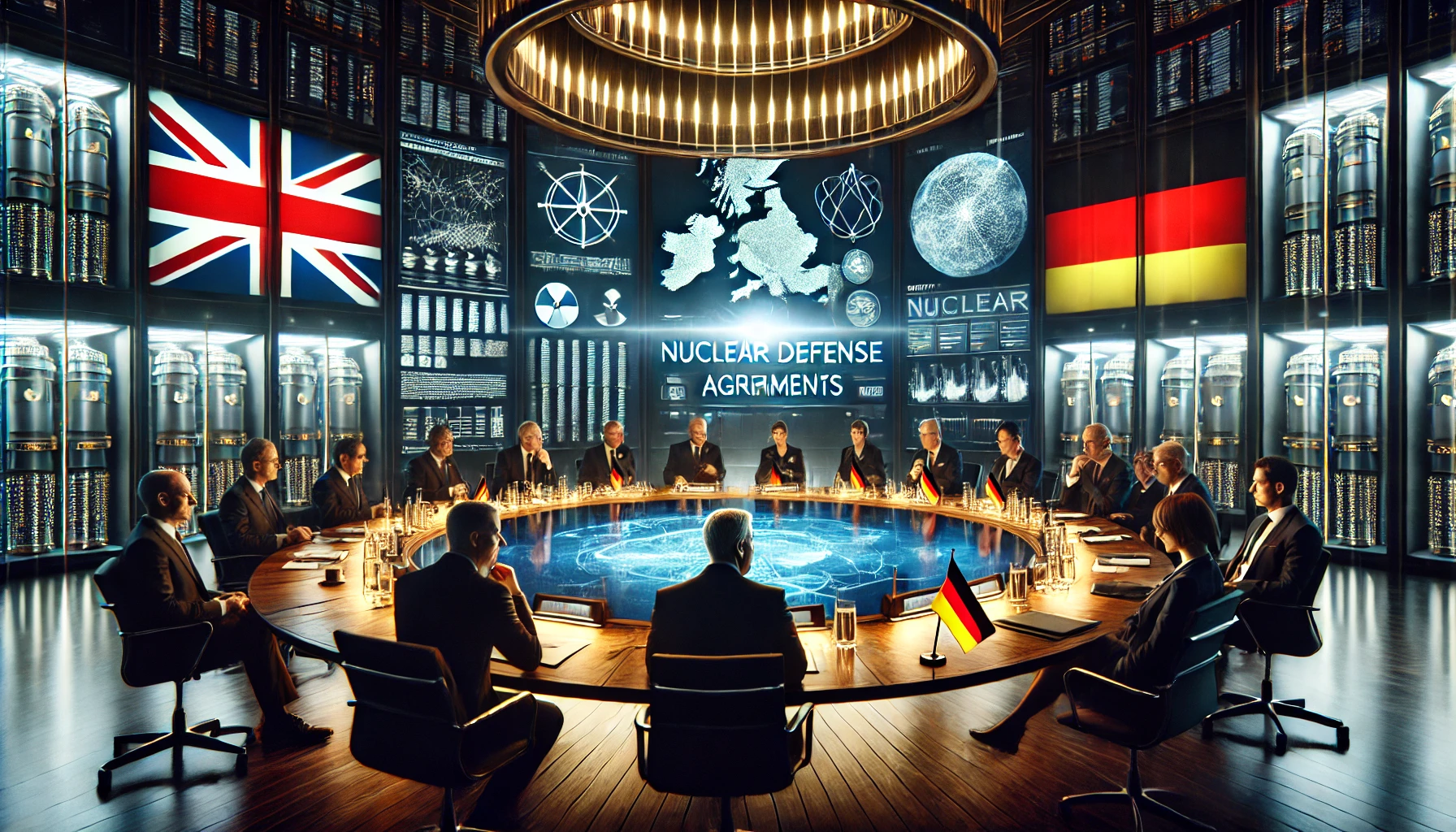
In recent developments, Germany is exploring the possibility of enhancing its national security through potential nuclear defense agreements with the United Kingdom and France. This initiative is primarily driven by Friedrich Merz, leader of Germany’s center-right Christian Democratic Union (CDU), who has advocated for discussions with Europe’s nuclear-armed nations to extend their protective “nuclear umbrella” over Germany (euractiv.com).
Background
Historically, Germany has maintained a policy of non-nuclear armament, relying on NATO’s collective defense framework for security assurances. However, recent geopolitical shifts and emerging security challenges have prompted German leadership to reassess the nation’s defense posture. Merz’s proposal signifies a strategic pivot, aiming to bolster Germany’s security through closer alliances with neighboring nuclear powers.
Potential Collaboration with the United Kingdom
The United Kingdom, as one of Europe’s two nuclear-armed states, plays a pivotal role in regional security dynamics. In August 2024, British Labour Party leader Keir Starmer and German Chancellor Olaf Scholz issued a joint declaration expressing intentions to formalize a bilateral cooperation treaty. This prospective agreement encompasses various domains, including defense collaboration, and is slated for signing by early next year (reuters.com).
While the declaration does not explicitly reference nuclear defense, the evolving partnership between the UK and Germany lays the groundwork for potential discussions on nuclear deterrence and shared security responsibilities.
European Context and Implications
Germany’s consideration of external nuclear protection occurs amidst a broader European discourse on energy and defense policies. Notably, Germany has been phasing out its nuclear power capabilities, with plans to complete this transition by 2023, as part of its Energiewende policy (world-nuclear.org).
This internal energy policy shift, coupled with external security concerns, underscores the complexity of Germany’s strategic decisions. Engaging in nuclear defense agreements with the UK and France could serve as a counterbalance to Germany’s domestic nuclear energy phase-out, ensuring robust national security while adhering to its energy transition commitments.
Conclusion
Germany’s potential pursuit of nuclear defense arrangements with the United Kingdom and France marks a significant development in European security affairs. As discussions progress, the outcomes will have profound implications for Germany’s defense strategy and the broader geopolitical landscape of Europe.
Sources:







Leave a Reply